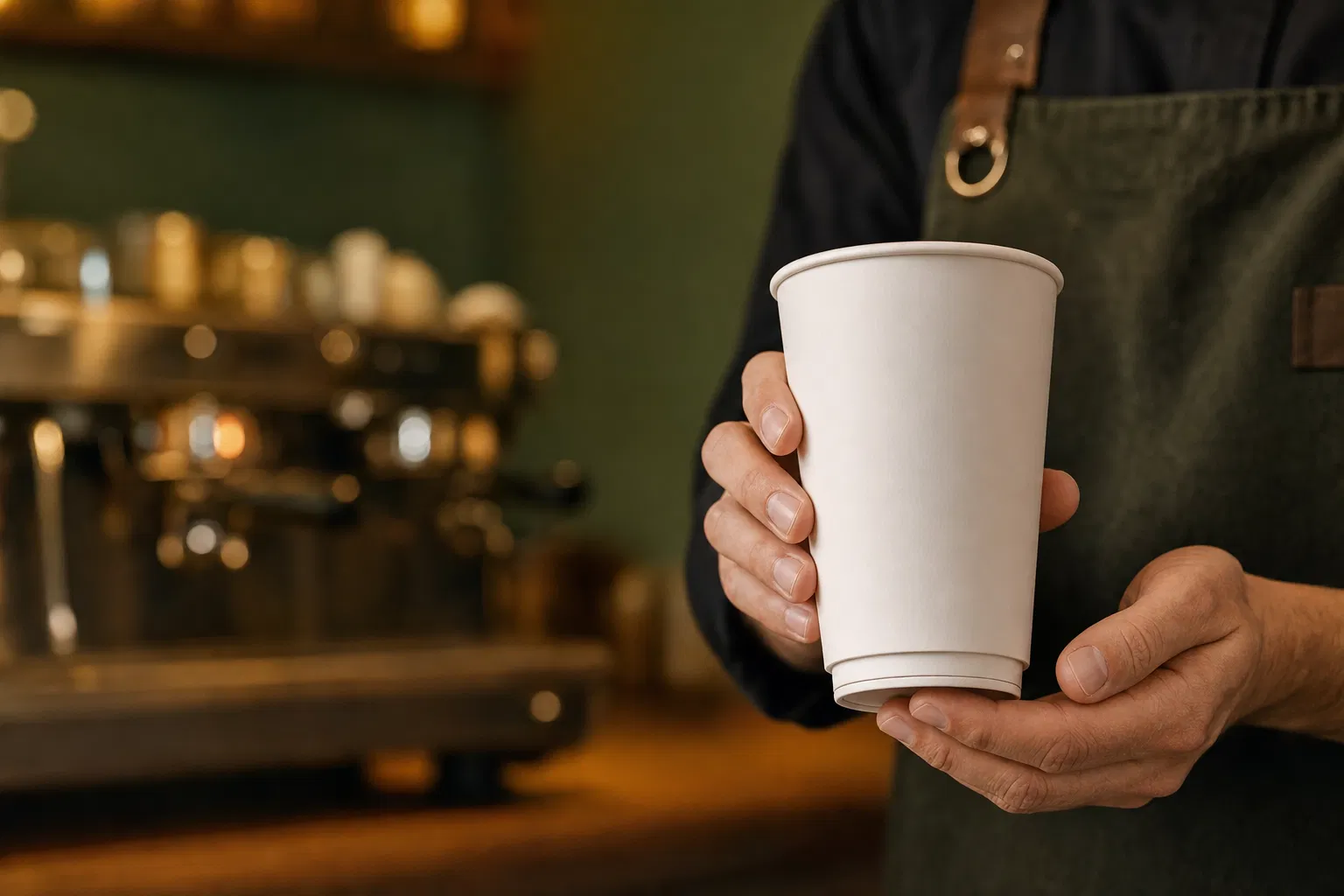
Aqueous Coated Paper Cups
A water-based barrier with no plastic film — the cup body stays recyclable in standard paper streams.
MOQ from 10,000 pcs/size · Free samples in 7 days · 25–30 business day lead time
Plain-language explanation
Aqueous coating replaces the conventional plastic film on the inside of a paper cup with a water-based barrier dispersion. Because there is no laminated plastic film to separate, the cup can be processed in standard paper recycling streams — the same bin as cardboard and office paper. This makes aqueous the strongest recyclability story in the paper cup category. It handles both hot and cold beverages, though the heat ceiling is somewhat lower than PE or PLA (see specs). For brands with plastic-reduction targets or recyclability compliance requirements, aqueous is often the most straightforward choice.
Cup Wall Structure
Diagram: cup wall layers (not to scale). Inner coating is the food-contact surface.
The thin blue layer is the aqueous dispersion — noticeably thinner than a PE or PLA film, with no plastic laminate.
Why buyers choose Aqueous Coated Paper Cups
No plastic film
The inner barrier is a water-based dispersion, not a laminated plastic film. This is the key structural difference that enables paper-stream recyclability — there is no film to separate from the fibre.
Independently lab-tested
Aqueous-coated board is tested by independent laboratories (Eurofins): overall and gas-phase migration, heavy metals, BPA and phthalates, primary aromatic amines, antimicrobial transfer, and odour/taste sensory panels — across both single and double aqueous builds. Test reports are available to verified buyers on request.
Recyclable in standard paper streams
Without a plastic film, the cup can be repulped in standard paper recycling facilities. No specialist separation step required. Acceptance is subject to local facility capability — check with your waste management provider.
Suitable for hot and cold beverages
Aqueous coating handles everyday hot drinks and cold beverages. For very high-temperature applications (90 °C+), PE or PLA coating provides a wider margin — see the specs table.
Reduces plastic content
Replacing the PE film with a water-based barrier reduces the plastic content of the cup. This supports plastic-reduction targets and simplifies recyclability claims under EU and UK packaging regulations.
PFAS-free by composition
Aqueous coating contains no per- and polyfluoroalkyl substances. All CupsPak coatings meet food-contact safety requirements under FDA 21 CFR and EU EC 1935/2004.
Specifications & Performance
Concrete numbers — because vague specs don't help you place an order.
| Property | Value |
|---|---|
| Max temperature | ~80 °C (warm beverages); for 90 °C+ use PE or PLA |
| Available sizes | 3 oz – 32 oz |
| Barrier performance | Good — moisture resistant, no plastic film |
| End-of-life | Standard paper recycling (facility-dependent) |
| Custom printing | Up to 7 colours |
| MOQ | From 10,000 pcs/size |
| Lead time | 25–30 business days |
| PFAS status | PFAS-free |
Aqueous vs the alternatives
Self-qualify before you enquire — the right coating depends on your market.
| Criterion | Aqueous (this page) | PLA Coated | PE Coated |
|---|---|---|---|
| End-of-life | Paper recycling | Industrial compost | Specialist recycling |
| Plastic content | None | Bioplastic (renewable) | Petroleum PE film |
| Hot-drink rating | Up to ~80 °C | Up to 95 °C | Up to 95 °C |
| Cost vs PE | Moderate premium | Moderate premium | Lowest |
| Best for | Recyclability-focused brands | Composting-program markets | High-volume, price-driven |
Which infrastructure does your market have — composting or paper recycling? That question usually decides between aqueous and PLA. View full Coating Guide →
What happens after use?
Honest end-of-life information — because greenwashing complaints hurt everyone.
✓ Recyclable in standard paper streams — facility acceptance varies by region. Check local guidelines.
Applications & Use Cases
Click through to the matching product page for sizes, specs, and samples.

Recyclability-focused café chains
Brands with plastic-reduction commitments and paper-recycling infrastructure at outlets.
View products →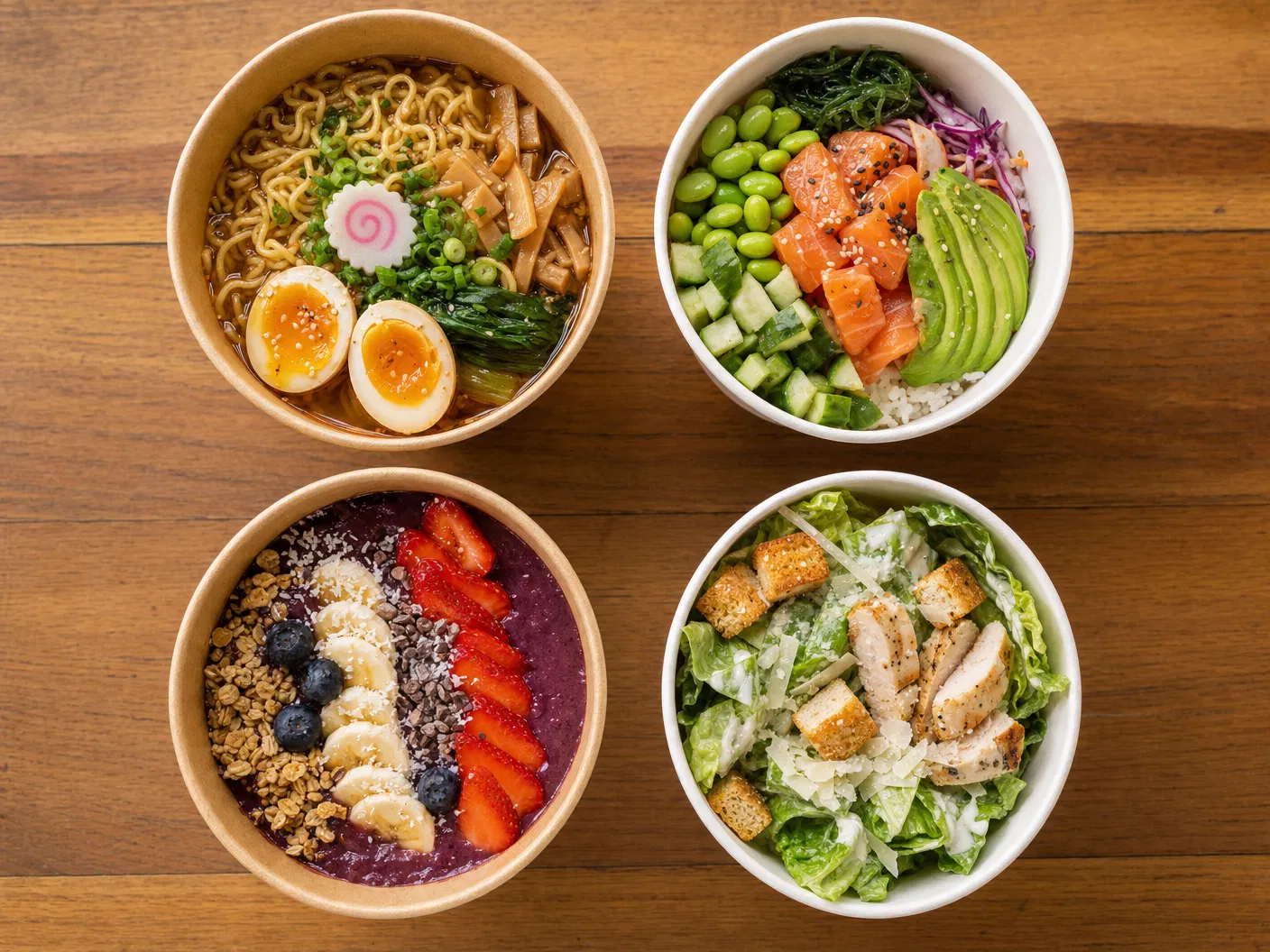
Takeaway food containers
Bowls and trays where a film-free barrier is a procurement requirement.
View products →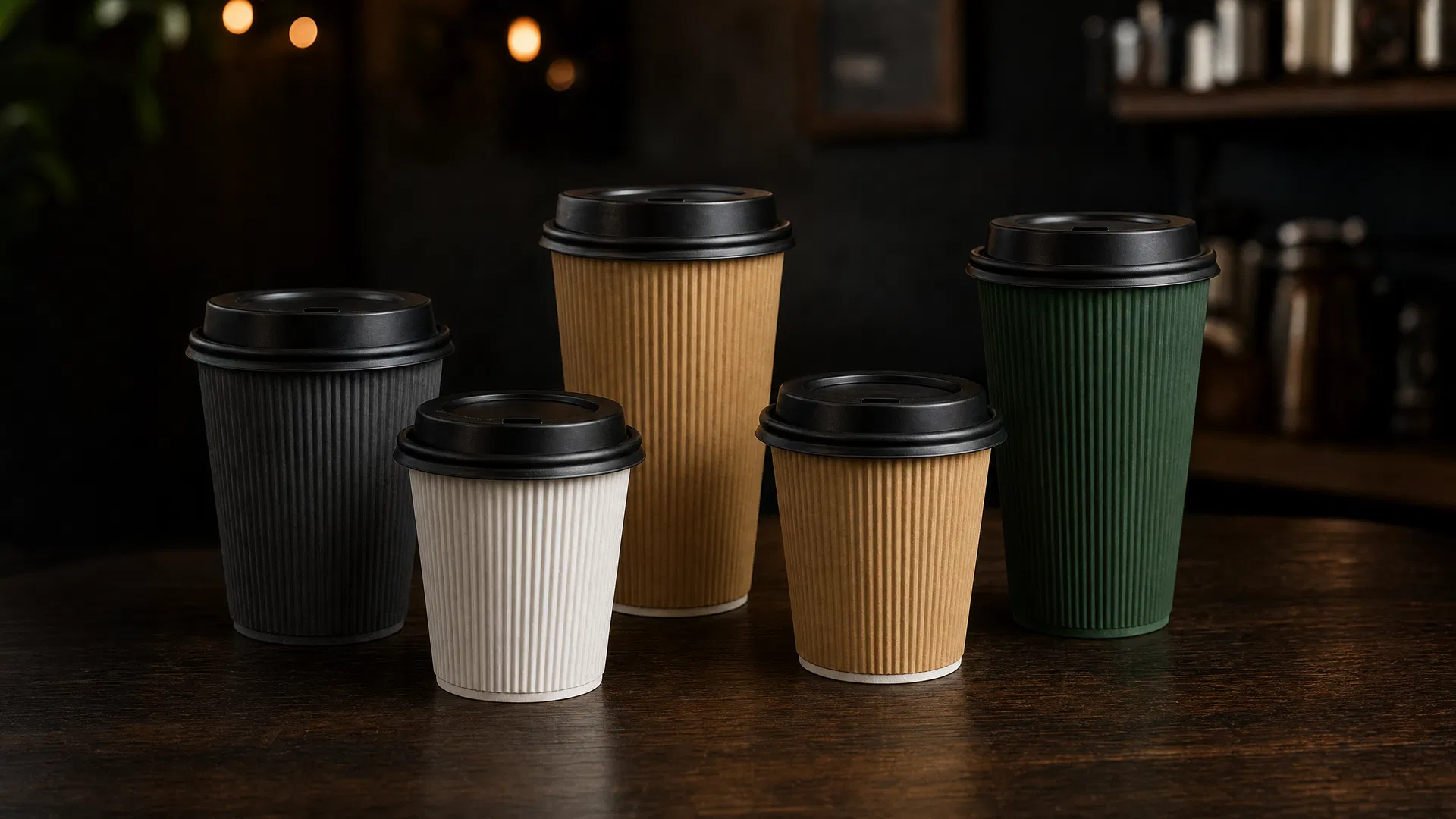
Markets with strong paper recycling
EU, UK, and Scandinavian markets where paper-stream recycling is well established.
View products →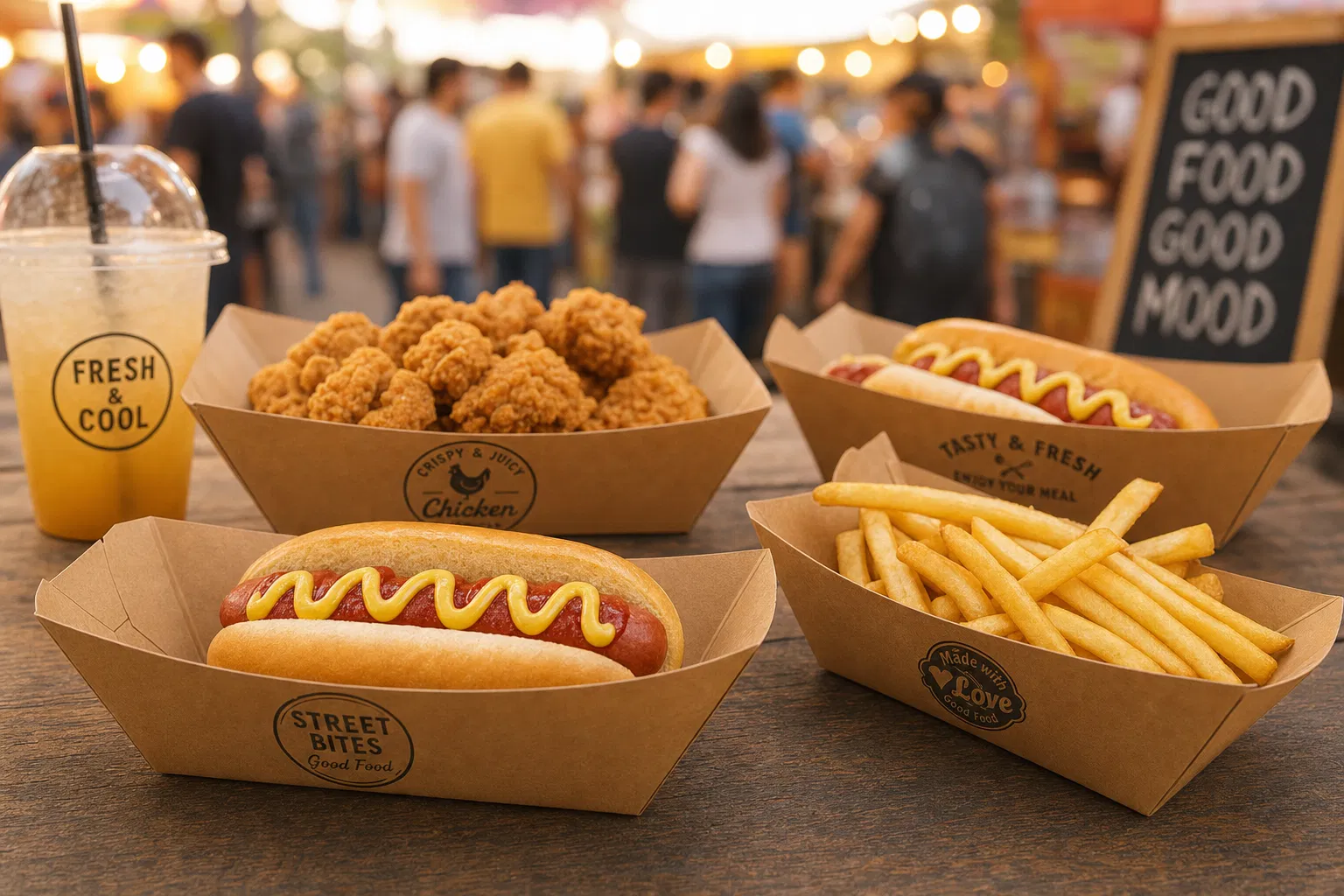
Food trays & wraps
Greaseproof food trays and paper food boats where a film-free barrier matters.
View products →Standards & Compliance
Documentation available for every shipment — test reports, CoC, and declarations on request.
Standards & Certifications
- ✓EU food-contact tested — (EU) 10/2011 and LFGB overall migration at 70 °C for 2 h; no FDA report on the aqueous coating yet
- ✓Recyclable — water-based barrier, no plastic film to separate
- ✓FSC-compliant paperboard available
- ✓PFAS-free across all coatings
- ✓Third-party test reports & declarations of compliance available on request
Quality Assurance
- ✓In-process quality checks at every production stage
- ✓Pre-shipment inspection before every order
- ✓Third-party test reports available on request
- ✓Declarations of compliance for customs & import
- ✓24-hour response to technical enquiries
- ✓Free samples dispatched within 7 days
Trusted by global brands


Products available with Aqueous Coated Paper Cups
All products below are available with this coating option.
Frequently Asked Questions
Other Coating & Material Options
Ready to order Aqueous Coated Paper Cups?
MOQ from 10,000 pcs/size · Production 25–30 business days · Custom printing up to 7 colours
Free samples in 7 days · Test reports & compliance docs available on request